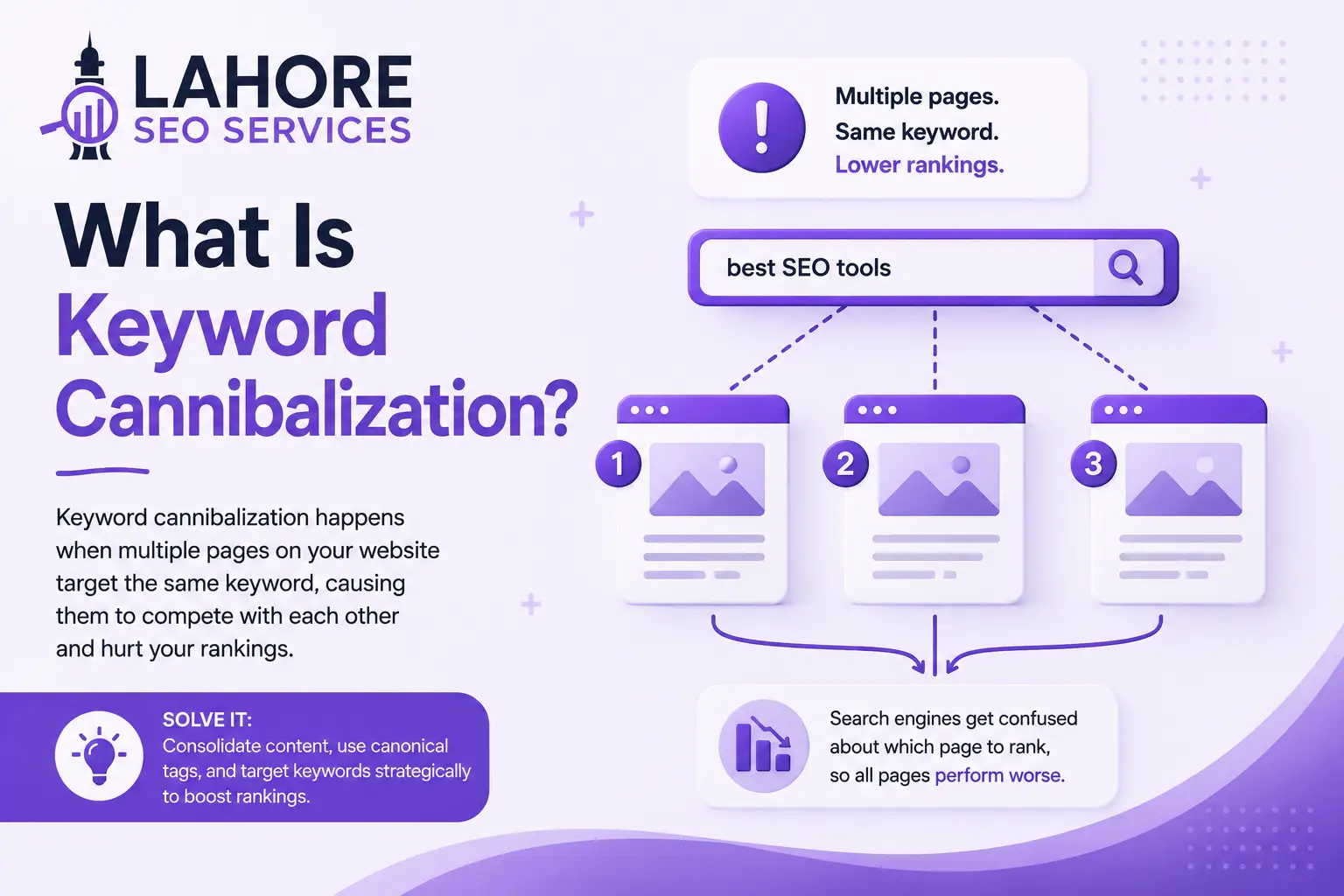
Keyword cannibalization occurs when multiple pages on your website target the same keyword or satisfy the same search intent, causing those pages to compete for the same search results. The issue can split ranking signals, dilute backlinks and internal links, create unstable rankings, and make the wrong page appear for a search query.
Keyword cannibalization in SEO does not mean that every repeated keyword creates a problem. A website can naturally use the same terms across related pages. Cannibalization becomes an SEO concern when multiple URLs have substantially overlapping topics, search intent, and ranking targets.
What Is Keyword Cannibalization in SEO?
Keyword cannibalization in SEO happens when two or more pages from the same website compete for the same search query or search intent. Search engines must determine which URL best satisfies the query, so ranking signals may become distributed across competing pages instead of concentrating on one clearly relevant page.
The problem is not simply keyword repetition. Search engines understand related terms, entities, content relationships, and intent. Two pages can contain the same keyword without cannibalizing each other when each page serves a distinct purpose. A service page and an educational guide can both mention “SEO services” while targeting different search needs.

What Causes Keyword Cannibalization?
Keyword cannibalization usually comes from overlapping content strategies, duplicate targeting, unclear search intent, or uncontrolled website growth. Five common causes create most cannibalization problems.
1. Similar Pages Target the Same Keyword
Publishing several pages around one keyword can create competition when each page attempts to rank for the same query. Blogs, category pages, service pages, and location pages can overlap when keyword research does not distinguish their purposes.
2. Search Intent Overlaps
Search intent determines what a searcher expects from a result. Two pages can use different primary keywords but still cannibalize each other when both satisfy the same intent and compete for the same SERP rankings.
3. Outdated Content Remains Live
Old guides, seasonal posts, and revised versions can remain indexed after newer pages cover the same subject. Multiple URLs then accumulate overlapping content and competing relevance signals.
4. Programmatic or Rapid Content Growth
Large websites can create duplicate pages through templates, filters, URL parameters, location combinations, or automated publishing. Fast content scaling can expand the number of cannibal pages before a content audit identifies the overlap.
5. Poor Keyword Mapping
Keyword research should assign a primary topic and search purpose to a specific URL. Without a keyword and topic map, writers can repeatedly target the same terms without realizing that another page already owns the query.
What Is a Keyword Cannibalization Example?
A keyword cannibalization example occurs when two pages target the same query and provide substantially the same type of answer. Imagine a Lahore SEO website has /seo-services/ and /best-seo-services/, and both pages target “SEO services” with the same commercial intent.
If both URLs attract impressions for the same query, receive similar internal links, and contain closely overlapping commercial content, the pages compete for one search opportunity. Google may alternate which URL appears, rank one URL below its potential, or select the page that does not best match the business objective.
How Does Keyword Cannibalization Affect SEO Rankings?
Keyword cannibalization can weaken organic performance by distributing relevance and authority across multiple competing URLs. The exact effect depends on the pages, query, search intent, links, content quality, and search engine interpretation.
Common effects include:
- Diluted ranking signals: Backlinks and internal links may point to different URLs instead of strengthening one primary page.
- Unstable rankings: Different pages can appear for the same query as search engines reassess relevance.
- Lower click efficiency: Search visibility can split across several URLs, and a less suitable page may receive the click.
- Reduced control: Your preferred URL may not be the page selected for the query.
- Crawl inefficiency: Large websites can spend crawling resources on unnecessary duplicate or overlapping URLs.
“Link juice” is an informal SEO term for authority or ranking value passed through links. The practical issue is not that Google mechanically divides a fixed quantity of link juice. The issue is that links, relevance signals, and internal prominence can point toward multiple URLs instead of a clearly prioritized page.
Does Keyword Cannibalization Always Hurt SEO?
No, keyword cannibalization does not describe every case where multiple pages rank for the same keyword. Search engines can rank several pages from one website when the pages satisfy different intents or provide distinct value.
For example, a category page, product page, comparison guide, and support article can all contain “office chairs.” The pages may rank for overlapping queries because each page answers a different need. Multiple rankings can therefore be legitimate rather than problematic.
You should investigate cannibalization when pages compete for the same intent, when the wrong URL repeatedly ranks, or when overlapping pages create unnecessary duplication. Do not merge pages solely because the same word appears in several URLs.
How to Identify Keyword Cannibalization on a Website
Identify keyword cannibalization by comparing search queries, ranking URLs, search intent, and content overlap. Google Search Console provides the most direct starting point because the Performance report connects queries with pages that received impressions and clicks.
Use Google Search Console
Open the Search results report in Google Search Console and filter the data by a specific query. Review the Pages tab to determine whether multiple URLs receive impressions or clicks for the same search query.
Multiple URLs are a signal for investigation, not automatic proof of cannibalization. Open the competing pages and compare purpose, content, primary topic, and intended audience. Confirm whether the URLs genuinely compete for the same search intent.
Use a Google Site Search
Search Google with site:yourwebsite.com “target keyword” to find pages that contain or appear relevant to the target phrase. The result set can reveal duplicate guides, overlapping landing pages, or older URLs that you forgot to review.
Compare SERP Overlap
Review the actual search results for the target query and compare the ranking pages. If two of your URLs repeatedly appear for the same query and satisfy the same intent, the overlap deserves a content decision.
Audit Titles, Headings, and Content
Compare title tags, headings, primary keywords, internal anchors, content depth, and conversion goals when reviewing SEO content optimization across competing pages. Duplicate titles or highly similar page structures can reveal targeting problems, but similar metadata alone does not prove cannibalization.
How to Fix Keyword Cannibalization
Fix keyword cannibalization by deciding which URL should serve the search intent, then consolidate, differentiate, or de-prioritize competing pages. Choose the solution according to the relationship between the URLs rather than applying the same technical fix to every case.
A useful audit records each suspected URL, target query, intent, current ranking, clicks, impressions, backlinks, and recommended action. This evidence makes consolidation decisions consistent and prevents new pages from recreating the same targeting conflict.
1. Consolidate Overlapping Pages
Merge pages when two URLs cover the same subject and intent and one stronger resource can satisfy the searcher better. Preserve unique, useful information from the weaker page in the consolidated version.
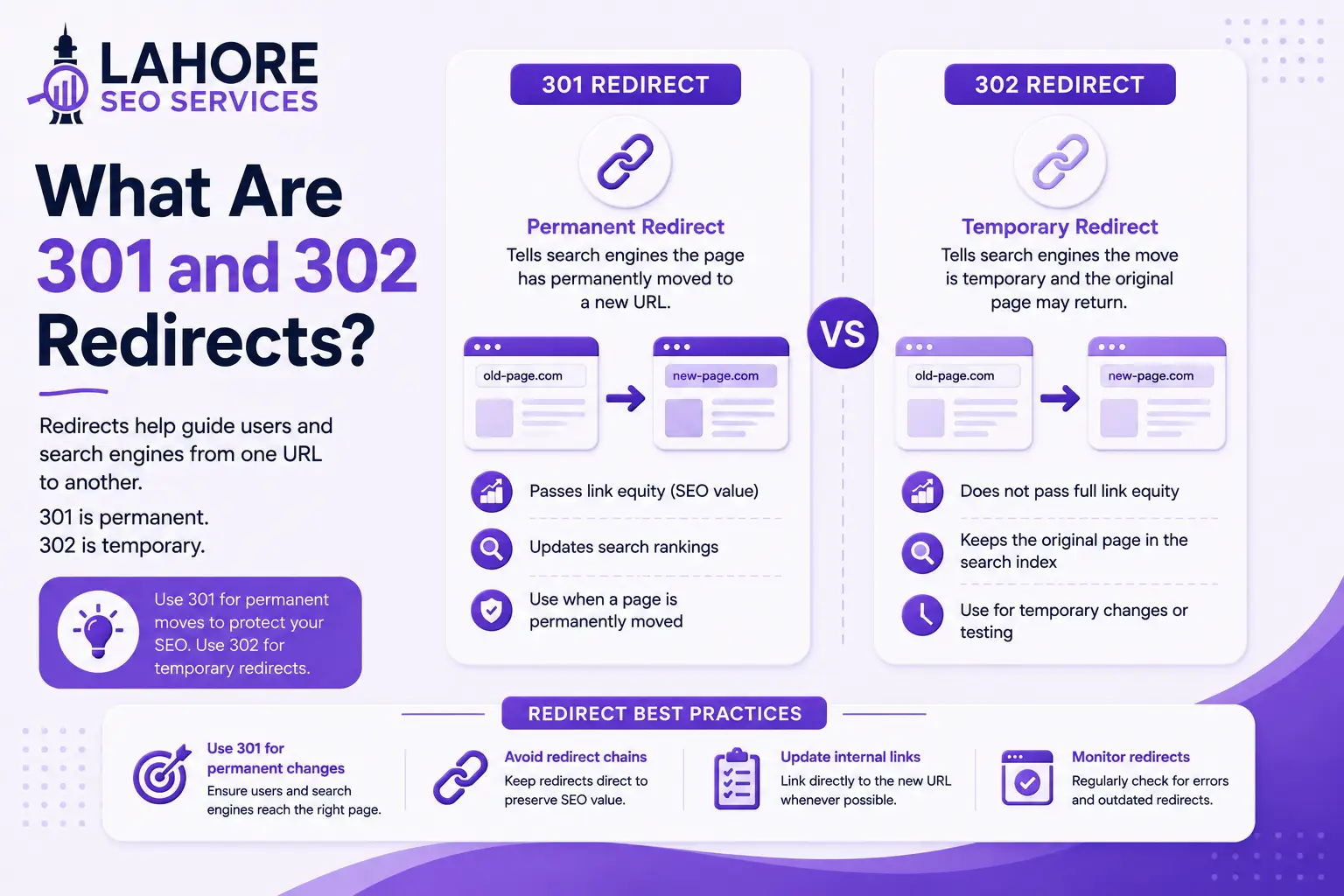
After publishing the preferred URL, use a 301 redirect from the retired URL to the relevant destination. Update internal links, XML sitemap entries, navigation references, and other site links so the preferred URL becomes the clear destination.

2. Change Keyword and Intent Targeting
Re-optimize a page when the page has a legitimate purpose that differs from the competing URL. Give each page a distinct primary topic, search intent, title, headings, and supporting content as part of a focused on-page SEO approach
For example, a general “SEO services” page can target commercial service intent, while a separate guide can target “how SEO services work.” The shared subject remains natural, but the page purposes differ.
3. Use Canonical Tags Correctly
Canonical tags help specify a preferred URL among duplicate or substantially similar versions, but canonicalization is not a universal cannibalization fix. Canonical tags suit situations where multiple URLs must exist for legitimate reasons, such as URL parameters or alternative paths.
A canonical signal tells search engines which URL represents the preferred version. Use consistent internal links and sitemap signals alongside canonical tags.
4. Use Noindex Selectively
A noindex tag prevents an eligible page from appearing in search results after a search engine processes the directive. Use noindex for pages that should remain accessible but should not compete in organic search.
Do not use noindex as the default solution for valuable pages that should rank. Consolidation, differentiation, or redirects usually provide a stronger structural solution when two pages genuinely compete.
5. Strengthen Internal Linking
Point internal links toward the URL that should own the topic. Use descriptive anchor text where the anchor naturally explains the destination.
Remove unnecessary internal links to competing URLs when those links reinforce an unintended priority. Consistent internal linking helps search engines understand the relationship and relative importance of pages.
When Should You Delete or Redirect a Page?
Delete or redirect a page when the URL has no independent search purpose and another relevant URL fully replaces the content. A 301 redirect is appropriate when the old URL has useful signals or users may still access the old address.
Do not delete a page solely because another page uses the same keyword. First determine whether the pages serve different intents, attract different queries, or provide unique value.
If an old page has no replacement and no meaningful search or user value, deletion can be appropriate. If the page has backlinks, traffic, or historical relevance, evaluate those signals before removing the URL.
How to Avoid Keyword Cannibalization
Prevent keyword cannibalization by mapping topics, search intent, primary keywords, and URLs before publishing new content. A structured content process reduces overlap before competing pages enter the search index.
Maintain a keyword map that records the primary keyword, secondary terms, search intent, target URL, page type, and content status. Check the existing website before approving a new article or landing page.
Use one clear primary purpose for each page. Related terms can support the primary topic without creating a second competing target. Review existing content before creating a new page for a keyword with similar wording.
Run regular content audits to identify duplicate pages, outdated URLs, overlapping keywords, and competing landing pages. Review Google Search Console data to identify queries that generate impressions for multiple URLs.
Final Takeaway
Keyword cannibalization is a page-targeting problem that occurs when multiple URLs compete for the same keyword and search intent. The solution starts with diagnosis, not automatic deletion.
Use Google Search Console, site searches, SERP analysis, and content audits to identify genuine overlap. Consolidate duplicate intent when one page should own the topic, differentiate pages when intents differ, and use redirects, canonical tags, noindex directives, and internal links according to the technical situation.
For businesses working with Lahore SEO Services, a clear keyword map and consistent content strategy can help prevent most cannibalization problems. Before publishing another page, check whether your website already has a URL that serves the same search need.
Frequently Asked Questions
What is keyword cannibalization in SEO?
Keyword cannibalization in SEO occurs when multiple website pages target the same keyword and search intent, causing those URLs to compete for search visibility. The problem can distribute ranking signals, create URL instability, and make a less suitable page appear for the target query.
What causes keyword cannibalization?
Keyword cannibalization results from overlapping page topics, identical search intent, duplicate content, poor keyword mapping, outdated pages, and uncontrolled content expansion. E-commerce filters, URL parameters, location pages, and repeated articles can create additional competing URLs when website architecture lacks clear targeting.
How does keyword cannibalization affect SEO rankings?
Keyword cannibalization can weaken search rankings when multiple URLs compete for the same intent and distribute relevance, links, and internal authority. Search engines may select different pages over time, rank a less suitable URL, or split organic traffic across competing results.
How to identify keyword cannibalization on a website?
Identify keyword cannibalization by filtering Google Search Console data for a query, reviewing multiple ranking URLs, and comparing search intent and content overlap. Confirm the issue through SERP analysis, site searches, internal-link audits, titles, headings, and page-level keyword targeting.