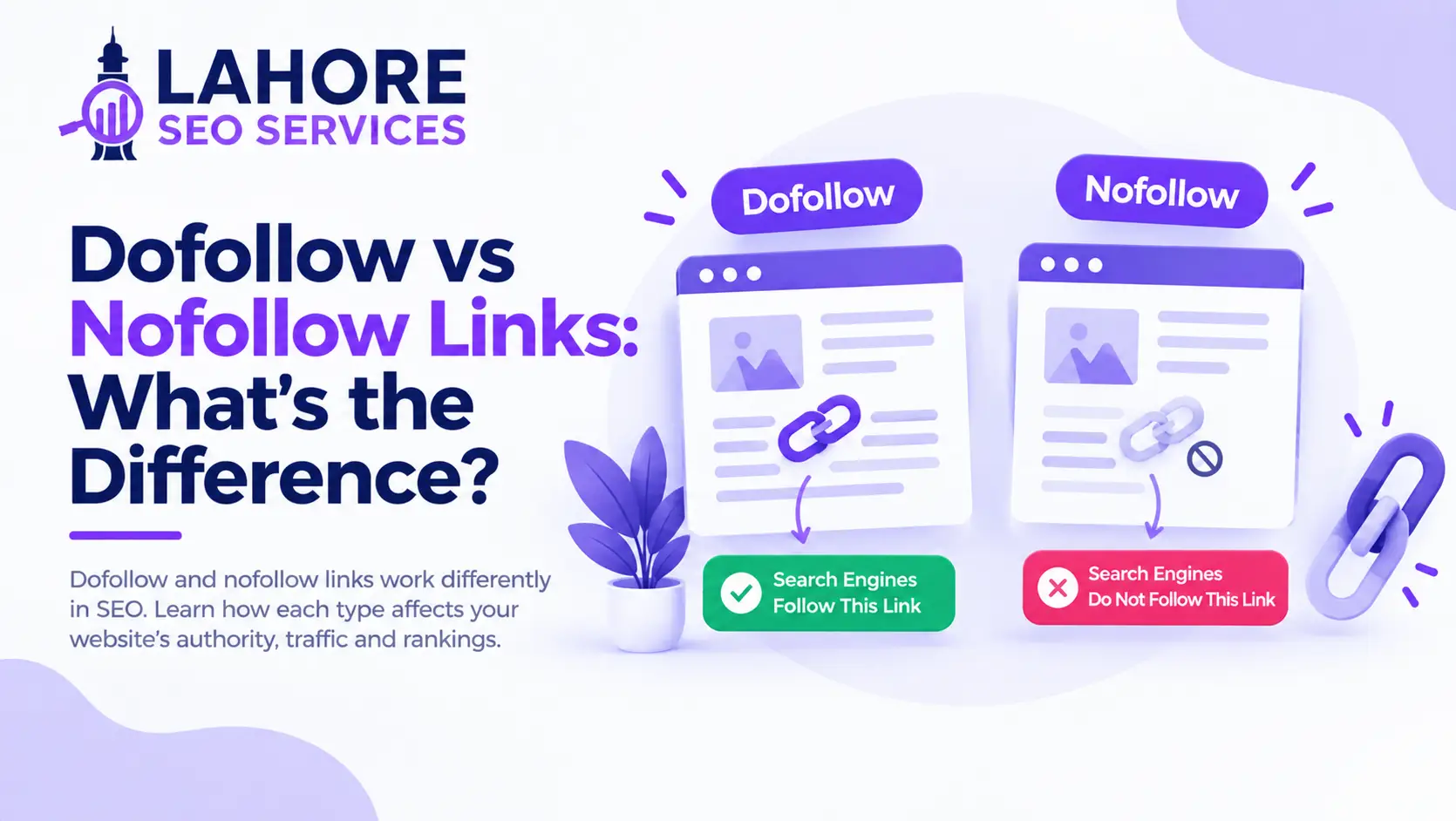
Understanding dofollow vs nofollow links helps you make better internal linking, backlink, and outreach decisions. Both link types send users from one page to another, but their link attributes communicate different signals to search engines. A standard link does not need a special “dofollow” attribute, while a nofollow link uses rel=”nofollow”. For businesses investing in Search Engine Optimization (SEO), the distinction matters because link qualification, relevance, placement, and purpose affect how search engines interpret links.
What Is a Dofollow Link?
A dofollow link is a normal HTML link that does not contain a restrictive rel=”nofollow” attribute. “Dofollow” is an industry term rather than an HTML link attribute. You do not need to add rel=”dofollow” to create one.
A standard link can help search engines discover connected pages and may contribute to the destination page’s PageRank and ranking signals. The value of a backlink depends on more than its follow status. Relevance, source quality, page context, anchor text, placement, and the relationship between the linking and linked pages all matter.
For example, a standard editorial link can look like this:
<a href=”https://example.com/seo-guide”>SEO guide</a>
The absence of rel=”nofollow” means the link is normally treated as a followed link. A followed backlink from a relevant, reputable page can support the authority and discoverability of the destination URL.
What Is a Nofollow Link?
A nofollow link contains rel=”nofollow” and tells search engines that the link should not be treated as a normal endorsement for ranking purposes. Google introduced the nofollow attribute in 2005 to help website owners address comment spam and other situations where publishers did not want to endorse linked destinations.
Example:
<a href=”https://example.com” rel=”nofollow”>Visit the website</a>
Nofollow does not make a link useless. Users can still click a nofollow link, visit the destination, generate referral traffic, discover a brand, and potentially become customers. Google later changed nofollow from a strict directive into a hint for crawling and indexing systems, so rel=”nofollow” does not guarantee that Google will never crawl or consider the destination.
What Is the Difference Between Dofollow and Nofollow Links?
The main difference is how search engines qualify the link for ranking and crawling purposes. A normal followed link can pass ranking signals, while rel=”nofollow” tells search engines not to treat the link as a standard endorsement or pass PageRank in the usual way.
| Factor | Dofollow link | Nofollow link |
| HTML status | Standard link | Uses rel=”nofollow” |
| PageRank | Can pass ranking signals | Does not pass PageRank in the normal way |
| Referral traffic | Yes | Yes |
| Brand exposure | Yes | Yes |
| Crawling | Can help discovery | Treated as a hint, not a strict block |
| Common use | Editorial and trusted links | Untrusted, paid, or user-generated links |
The distinction is not a choice between “good” and “bad” links. A link should match the relationship and purpose of the connection.
When Should You Use Nofollow Links?
Use rel=”nofollow” when you cannot or do not want to treat a link as a normal editorial endorsement. The most important cases include paid links, certain affiliate relationships, and user-generated content where individual destinations cannot receive editorial review.
Paid placements require careful qualification because compensation changes the nature of the link. Google provides rel=”sponsored” specifically for links created through advertisements, sponsorships, or other compensation agreements. A publisher can use rel=”sponsored” alone or combine it with nofollow.
Example:
<a href=”https://example.com” rel=”sponsored nofollow”>Partner</a>
Affiliate links can use appropriate sponsored qualification because the publisher receives compensation through the relationship. User-generated content can use rel=”ugc” to identify links created by users, such as links in comments and forum posts.
Example:
<a href=”https://example.com” rel=”ugc nofollow”>Website</a>
These attributes provide more context than relying on one generic rule for every external link.
What Are rel=”sponsored” and rel=”ugc”?
rel=”sponsored” identifies compensated links, while rel=”ugc” identifies links placed within user-generated content. Both attributes were introduced by Google in 2019 as additional ways to describe link relationships.
Use rel=”sponsored” for advertisements, sponsorships, and other compensated placements. Use rel=”ugc” for links in comments, forums, and other user-generated areas. Both attributes can be combined with rel=”nofollow” when appropriate.
Existing nofollow links do not require replacement simply because these newer attributes exist. The rel=”nofollow” attribute remains a valid general-purpose qualification. Your implementation should reflect the actual relationship rather than applying attributes mechanically.
Are Nofollow Links Valuable for SEO?
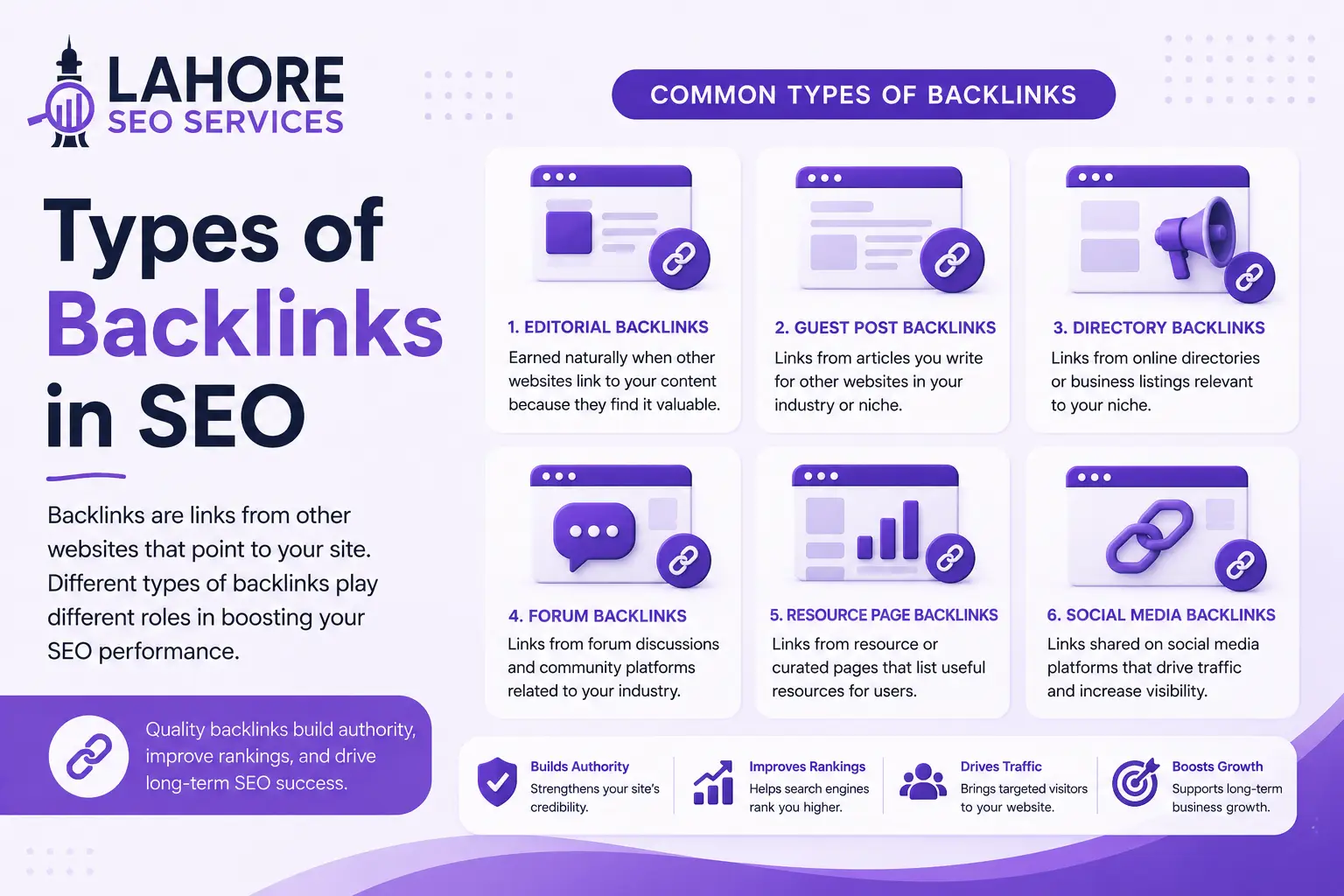
Yes, nofollow links can support SEO indirectly through referral traffic, brand exposure, discovery, and a broader backlink profile. A nofollow backlink from a relevant website can introduce your business to an audience that may visit your website, search for your brand, mention your business, or create future editorial links.
A backlink strategy should therefore evaluate the people and visibility a link can generate, not only whether the link passes ranking signals. A natural backlink profile can contain different link attributes because websites acquire links from editorial coverage, directories, social platforms, forums, partnerships, sponsorships, and other sources.
Do not pursue nofollow links solely to manufacture a particular ratio. Search engines do not provide a universal required percentage of followed versus nofollow backlinks. Focus on earning relevant links from legitimate sources and maintaining useful relationships between pages.
Should Internal Links Be Nofollow?
Most internal links should remain standard followed links because internal links help users navigate and help search engines understand site structure. Use appropriate internal links to connect related pages, important services, category pages, supporting articles, and other URLs that deserve discovery and ranking consideration.
Using nofollow across internal links to manipulate PageRank distribution is not an effective modern SEO strategy. Historical PageRank sculpting practices attempted to concentrate ranking signals by excluding selected links, but search engines changed how link equity calculations work, making this approach unsuitable as a routine optimization method.
If a page should not appear in search results, rel=”nofollow” is not the primary control. Depending on the technical situation, directives such as noindex, canonicalization, robots controls, or removal of unnecessary URLs may address the underlying indexing problem more directly.
Does Every Dofollow Link Pass the Same Authority?
No, the following links do not carry identical values. Search engines evaluate links in context, so a relevant editorial link within useful content can be interpreted differently from a sitewide footer link, navigation link, sidebar link, author profile link, or comment link.
Placement provides context, but no single placement guarantees a ranking benefit. A backlink from a page that is topically relevant and independently useful can provide stronger signals than a low-quality link placed only to manipulate rankings.
For internal SEO, prioritize links that help users reach important pages through relevant surrounding content. For link acquisition, prioritize genuine editorial mentions rather than chasing followed status alone.
How Do You Check Whether a Link Is Dofollow or Nofollow?
Inspect the link’s HTML code and check the rel attribute. Right-click the link, choose “Inspect,” and locate the relevant <a> element in the browser’s developer tools. A link containing rel=”nofollow” is nofollow. A standard link without that restriction is normally followed.
You can inspect the page source with Ctrl+U and search for the destination URL or anchor text. SEO crawlers can provide a faster sitewide view. Screaming Frog SEO Spider, for example, can help you identify followed and nofollow internal links through link and inlink data.
Backlink platforms such as Ahrefs, Moz, or similar tools can help you inspect external backlink attributes at scale. Tool classifications can differ, so inspect the underlying HTML when a specific link matters.
How Do You Manage Link Attributes in WordPress?
Manage link attributes through the WordPress editor or the HTML source when you need precise control. Add a link normally, then edit the link’s HTML when a nofollow, sponsored, or UGC qualification is required.
Many SEO plugins provide controls for link attributes, but plugin interfaces vary by version. Avoid automatically converting every external link to nofollow because external linking should reflect editorial intent and relevance.
For a WordPress website, review important links manually when commercial relationships, user-generated content, affiliate tracking, or unusual external destinations require specific qualification. A technical SEO audit can then verify that the implementation matches the intended link relationship.
Common Dofollow and Nofollow Link Mistakes
The most common mistake is treating link type as the only measure of SEO value. A followed link from an irrelevant or manipulative source does not automatically become valuable, while a nofollow link can produce substantial referral traffic and brand exposure.
Avoid these five errors:
- Adding rel=”dofollow” because no such standard attribute is required.
- Using nofollow on every external link without considering editorial relevance.
- Using nofollow as a replacement for proper indexing controls.
- Ignoring sponsored qualification for compensated links.
- Treating backlink ratios as a fixed SEO target.
A strong link strategy focuses on relevance, context, user value, technical correctness, and legitimate acquisition.
How Should You Build a Balanced Link Strategy?
Build your link strategy around useful pages, relevant relationships, and correct link qualification rather than a fixed dofollow-to-nofollow ratio. Start with strong internal linking so search engines can discover important pages and understand topical relationships. Earn external editorial links by publishing useful resources that other websites can reference naturally.
Use nofollow, sponsored, or ugc when the relationship requires qualification. Review your backlink profile for relevance, suspicious patterns, lost links, valuable referring pages, and referral opportunities. Measure organic visibility, referring traffic, conversions, indexed pages, and rankings instead of counting followed links alone.
For businesses seeking structured SEO implementation, Lahore SEO Services can use technical audits and content-led strategies to evaluate internal links, external backlinks, link attributes, and page relationships together.
What Matters More Than Link Type?
Link relevance and context matter alongside the follow attribute when you evaluate backlink quality. A useful link connects related topics, gives visitors a reason to click, and supports well-optimized content.
Review backlinks for five factors:
- Relevance: The linking page should relate to your subject, industry, service, or audience.
- Context: Surrounding content should explain why the destination is useful.
- Source quality: The referring website should provide content and a legitimate reason for publishing the link.
- Placement: Editorial links within content can provide stronger context than repetitive sitewide placements.
- Link purpose: The attribute should accurately describe whether the link is editorial, sponsored, affiliate-related, or user-generated.
This approach prevents backlink audits from becoming dofollow counts. Examine why each link exists, what users gain, and whether the HTML qualification matches the relationship.
Frequently Asked Questions
Are dofollow links better for SEO than nofollow links?
Dofollow links can contribute directly to ranking signals, while nofollow links serve different purposes and can provide indirect SEO value. A followed link can support PageRank, whereas a nofollow link can generate referral traffic, brand exposure, and discovery without normal PageRank transfer.
Do nofollow links help with SEO?
Yes, nofollow links can help SEO indirectly even though they do not normally pass PageRank. A relevant nofollow backlink can generate referral traffic, expose your brand to new audiences, support content discovery, and contribute to a natural backlink profile with varied link relationships.
When should you use a nofollow link?
Use a nofollow link when a link should not represent a normal editorial endorsement. Common cases include certain paid relationships, affiliate links, and user-generated links. Use rel=”sponsored” for compensated placements and rel=”ugc” for appropriate user-generated content.
How can you check whether a link is dofollow or nofollow?
Inspect the link’s HTML and check the rel attribute for nofollow. Right-click the link, select Inspect, and locate the <a> element. SEO crawlers and backlink analysis platforms can provide faster checks across multiple pages or external referring domains.
Can a website have both dofollow and nofollow links?
Yes, a website can have both dofollow and nofollow links, and the combination is normal. Standard editorial links can remain followed, while paid, sponsored, affiliate, or user-generated links can receive appropriate qualifying attributes based on the relationship and publishing context.